88% accuracy. Zero black boxes. That is what our team brought back from Santiago de Compostela, where the core model of PREVICTS was trained alongside the researchers of the Health Research Institute of Santiago de Compostela (IDIS).
PREVICTS is an explainable AI pipeline for stroke detection and prevention. It predicts the type of stroke from blood and behavioural data, and, just as importantly, it tells clinicians why it reached that prediction, in a form they can read, question and trust.
Why stroke is a race against time
Stroke is one of the leading causes of death and long-term disability worldwide. It happens when blood flow to part of the brain is interrupted, and every minute without treatment can mean more brain tissue lost.
Not all strokes are the same. In an atherothrombotic stroke, a blood clot forms in an artery supplying the brain, while in a cardioembolic stroke, the clot forms in the heart and travels to the brain. Although their causes differ, both types require urgent medical attention, and clot-dissolving treatments can be beneficial in certain cases but dangerous in others, depending on the patient’s condition.
That is why knowing the type of stroke, and knowing it early, matters so much. It shapes the treatment a patient receives, the follow-up they need and the steps that can be taken to prevent another event.
Blood markers and behavioural factors, such as lifestyle and habits, carry valuable signals about a patient’s risk and stroke type. The challenge is turning that information into something a clinician can act on.
Why a prediction alone isn’t enough
Our starting point was blood and behavioural data from 4,000 people who suffered a stroke. With a dataset like that, the usual move in AI is to reach for a deep, black-box model and chase the highest possible score.
In medicine, that is not enough. A model that says “this patient has a 70% chance of this stroke type” without saying why leaves the neurologist with a number they cannot verify, challenge or explain to a colleague or a patient. Clinicians are accountable for their decisions, so they need to see the reasoning behind a prediction before they can rely on it.
Opaque models also make it harder to spot when a prediction is driven by something spurious, such as a pattern in the data that does not reflect real biology. In a clinical setting, that kind of hidden error has real consequences.
So from day one, we set ourselves a different goal: a model that is accurate and explains itself.
Our approach: logic you can read, causes you can question
Instead of another deep black-box model, we combined two ideas: Tsetlin Machines and causal inference.
Tsetlin Machines are a family of machine-learning models introduced by Ole-Christoffer Granmo in 2018. Rather than adjusting millions of numerical weights, they learn patterns as simple logical clauses, in the form of “if this AND this AND NOT that”. Many such clauses vote together to reach a prediction. Because the learned knowledge is written in plain logic, a person can read it directly.
Causal inference is a set of methods for telling apart what truly drives an outcome from what merely appears alongside it. In healthcare, the difference matters: a factor that is only correlated with a stroke type is a weak foundation for a clinical decision, while one with a causal role is something a neurologist can reason about.
Bringing the two together gives us a model with a clear purpose. It learns compact, human-readable rules from the data, and it does so with attention to what is actually behind a prediction rather than to coincidence. The result is a model that predicts the type of stroke with 88% accuracy without hiding how it got there.
What clinicians see
For every patient, PREVICTS gives two things:
- A simple probability (%) for each stroke type, so the clinician sees at a glance how the model weighs the possibilities.
- A readable logical-clause explanation of what drives the prediction, written as logic rather than as a score from a hidden layer.
There are no opaque weights to take on faith. A neurologist can read the clauses, compare them with their own clinical judgement and challenge anything that does not look right. If the reasoning holds up, the prediction becomes a trustworthy second opinion. If it does not, the clinician can see exactly where it breaks down.
This is the principle behind the project: AI should support clinical decisions, not replace the professional who makes them.
Trained on-prem, built to be deployed
Health data is among the most sensitive information there is, and it comes with strict medical and security standards. A model that cannot respect them will never leave the lab.
That is why all training of the PREVICTS core model ran on-prem at the hospital, under its own medical and security standards. Patient data never left the building.
This was not a workaround. It is exactly what makes the model deployable: it was built from the start inside the environment where it is meant to work, with the people responsible for protecting that data. Working this way also means the results come from the real clinical setting, not from a simplified version of it.
A collaboration, side by side
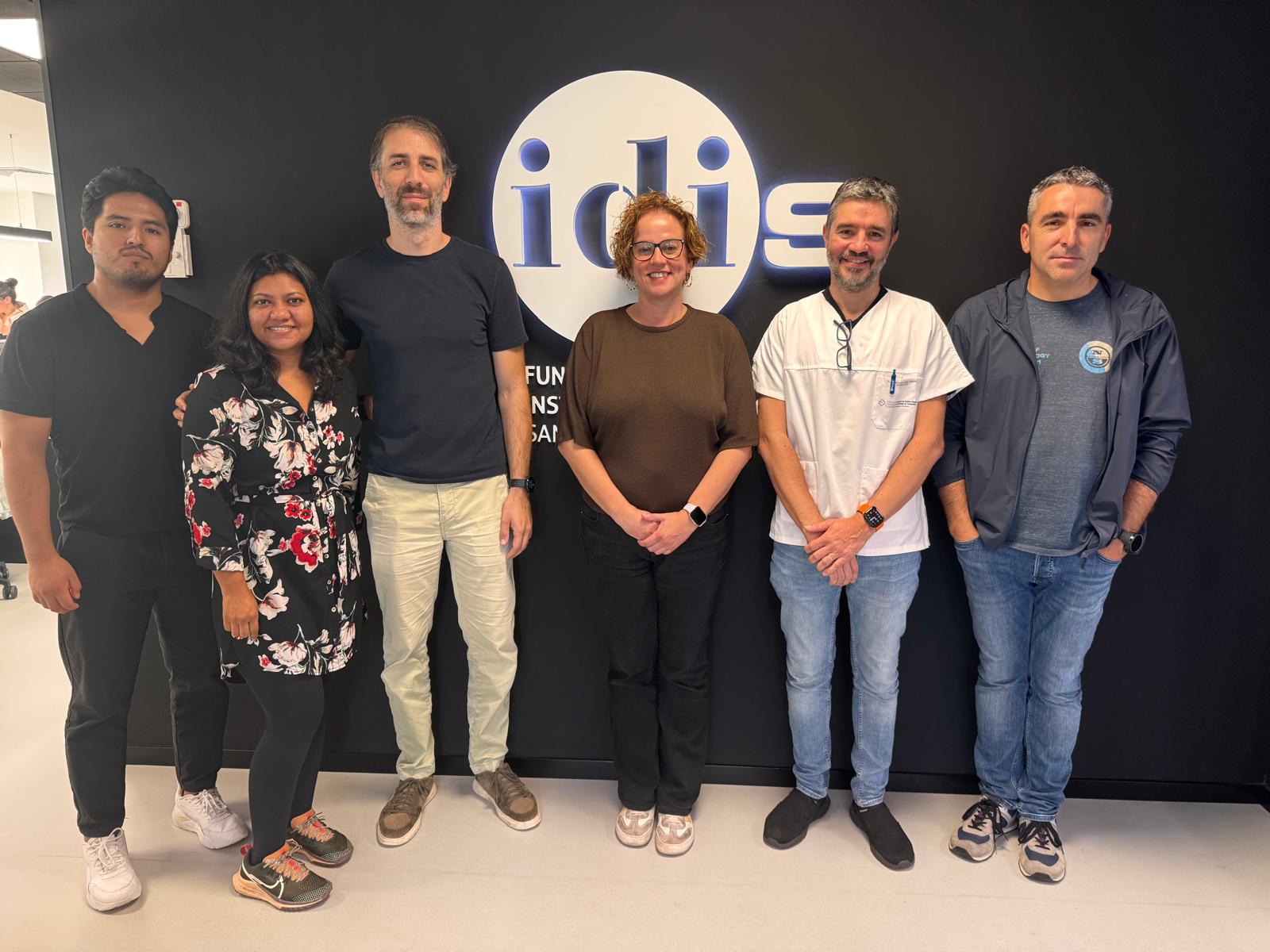
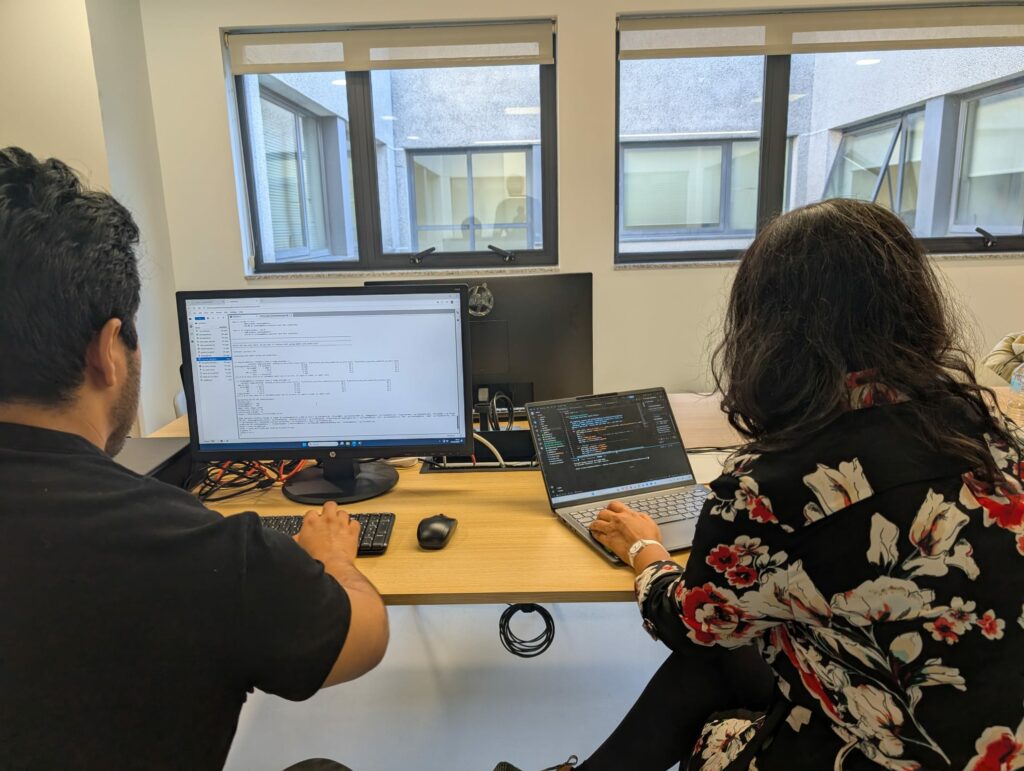
PREVICTS is not something that was built remotely and delivered at the end. Our team travelled to Santiago de Compostela and worked there with the IDIS researchers to train the core model, in the place where the data lives and the clinical questions are asked.
This wouldn’t exist without Jalpa Soni, PhD (lead data scientist), Bryan Kevin Condor Romero (full-stack mage) and Victor Saenger (R&D Tech Lead).
Our huge thanks go as well to Francisco Campos, Manuel and Mabel, to the whole Health Research Institute of Santiago de Compostela team, and to our colleagues at our research lab at Capitole Lab.
What’s next
Training the core model is a major milestone, but it is the beginning of the journey. Our ongoing collaboration with IDIS will keep improving the platform, and we are excited for what comes next.
PREVICTS is a project funded by CDTI (the Spanish Centre for the Development of Industrial Technology), carried out between Capitole Lab and IDIS. It shows what becomes possible when technology teams and clinical researchers work in the same room: AI that is accurate, understandable and ready for the realities of a hospital.
Once more, thank you to the Health Research Institute of Santiago de Compostela for making this collaboration possible.